
There Is Control, But No Purpose: Where Are We Steering the Wheel?
Control alone is not enough — without clear direction and strategy, businesses fail to grow
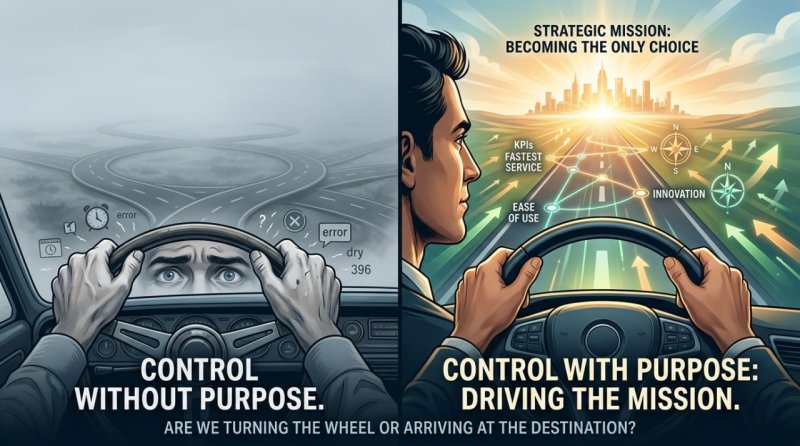
Imagine that you are gripping a car’s steering wheel very tightly and driving with full control. Every movement is under your command, but there is one problem — you do not know where you are going. In business, trying to control processes without setting a clear objective is just as illogical.
Is Control Just Another Cost?
One of the most common tendencies among managers today is the desire to impose systems on employees and monitor them strictly. The intention behind this is usually to see who is doing what, and then determine salaries or bonuses accordingly. However, if the purpose of control is only to identify an employee’s mistakes or measure working hours, it becomes an unnecessary burden for the business:
Illogicality: control without purpose creates a culture of “appearance” or imitation among employees.
Result: an employee may produce the dry numbers required by the system, but the company itself will not develop from within.
KPI vs. Mission: “The Spirit Behind the Numbers”
Many entrepreneurs begin their businesses with a great Mission — a meaningful purpose. But as operations deepen, they often get absorbed in improving only day-to-day issues (“routine work”) and end up building their KPI systems solely around those small operational matters.
Problem: if the system focuses only on today’s profit, long-term strategic advantage is lost.
Solution: KPIs should strengthen the company’s key differentiator in the market. For example, if your mission is “The Fastest Service,” then employees should be rewarded not only for sales volume, but also for resolving the client’s problem on the very first attempt.
“Be Unbeatable in a Narrow Direction”
The employee met the target, revenue came in, errors decreased — so what now? Simply “not being bad” is not enough to win in the market. True victory means being better, over the long term, than colleagues, competitors, and even your own past performance in one specific narrow direction. There may be ten businesses on the market that look similar to yours, but they will not be able to impress the customer in that one exact way that you can.
The Apple example: Apple does not simply sell technology. For years, Apple has shaped its employees around the mission of “ease of use and design.” As a result, even though others also produce phones, Apple continues to impress customers.
Conclusion
Every leader should ask: is our control system merely exhausting employees, or is it guiding us toward becoming the only real choice in the long term? In the long run, a strategy aimed at becoming “the strongest link in the market tomorrow” brings more value than making 1 soʻm of profit today. We will continue to explore this topic gradually, from different angles. Perhaps it will be useful for someone.